

Part 3: The Binary
Tony's sentence on page 38 forces a choice. Path A leaves a paper trail. Path B leaves a heavier one. The records FDLE pulls will tell them which.

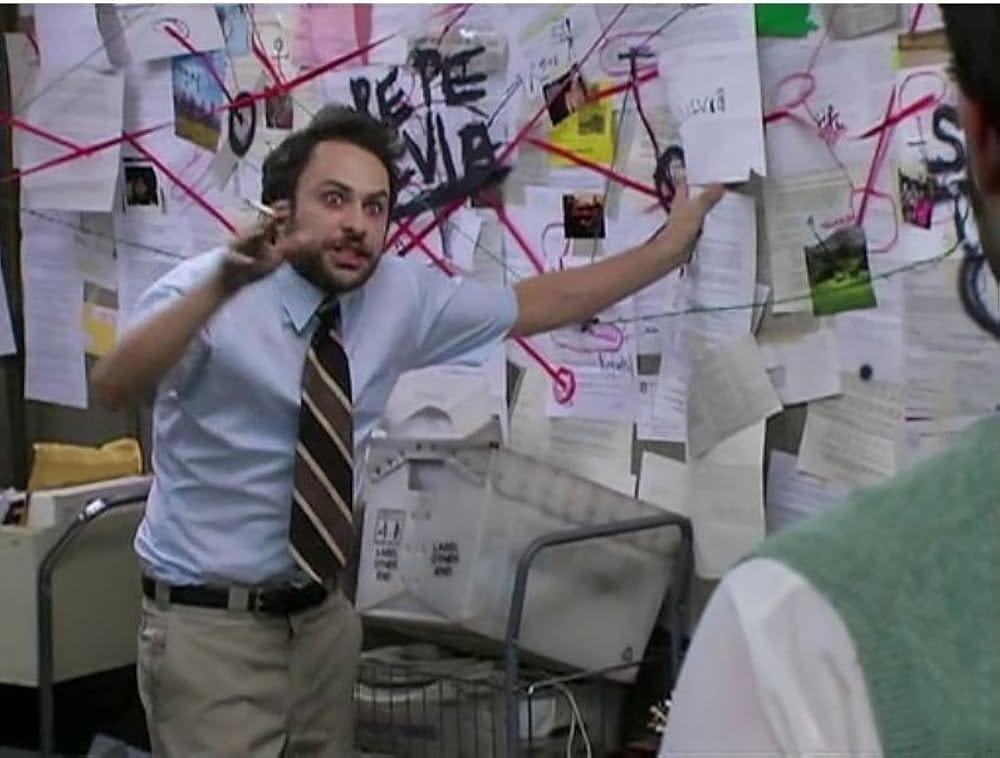
FDLE has the file open. The question is whether anyone over there has read page 38.
So let’s help. Here’s what to look for. Not the data. Who left the barn door open.
The Binary
Tony made one claim about how the data left the building. One sentence, page 38, signed and bound:
“All data points and figures in this study were collected from BSO in accordance with Florida public records laws, rules, and regulations.”
That sentence forces a binary. Either it’s true or it isn’t. There is no third option.
Path A: It was a public records request. Then Tony has to be treated exactly the way any other Chapter 119 requester would be treated. Same rules. Same paperwork. Same fees. Same redaction process. No exceptions for the badge.
Path B: It wasn’t a public records request. Then the sentence is a fabrication, and the actual transfer was an internal authorization that required an entirely different paper trail.
Both paths produce documents. Different documents. The records FDLE pulls will tell them which path they’re on.
Path A: If This Was a PRR
If this was a Chapter 119 transaction, then BSO treated Tony the same way BSO would treat me, or you, or any other resident who walked up to the records counter and asked.
Picture it. I send BSO a request for seven years of CFS data, RMS reports, CAD logs, and PeopleSoft demographic records covering 1,500 deputies and 35,663 calls for service. What happens?
A request log entry, with a number assigned. A response from the custodian within a reasonable time. A fee estimate, because Chapter 119 permits agencies to charge for “extensive use” of resources. For a query of this size across four production systems, that fee runs into thousands of dollars. A redaction memo, because CAD and RMS data contain exempt material under Florida statute. Names of victims of certain crimes. Active investigation references. Officer home addresses under Marsy’s Law. Every exempt field has to be identified, redacted, and the redaction has to be logged with a statutory citation.
A production letter naming the responsive records and any withheld material. An acknowledgment from the requester accepting the production. A retention copy of everything BSO handed over.
That’s the floor. That’s what a Chapter 119 transaction looks like. None of it is optional. The custodian has no discretion to skip steps. The fee can be waived, but the waiver itself is a document with a signature on it.
So FDLE’s first question writes itself.
Where is the request log entry? Where is the fee invoice or the fee waiver? Where is the redaction memo? Where is the production letter?
If the answer is those documents don’t exist, then Path A collapses. Tony’s sentence isn’t true. He didn’t get the data through Chapter 119, because no Chapter 119 transaction occurred.
There’s something buried inside Path A worth naming. If the transaction had occurred, it would have left a record any other resident could request. The fee alone would have generated a budget code. Somebody approved the waiver, or somebody paid the bill. Either way, somebody signed something. That signature is the document FDLE wants.
Path B: If This Was Internal Access
If Path A collapses, Path B is the only remaining explanation. Tony got the data through an internal authorization, used his role as Sheriff to direct a sworn subordinate to pull records from production systems, and then mislabeled the legal authority for it in his own dissertation.
That path requires its own paper trail. A different one. A heavier one.
A research authorization, in writing, signed by someone with delegated authority to approve outside academic use of agency data.
The signer cannot be Tony.
Tony has said, on the record, that the Broward Sheriff is the most powerful office in the county. He’s right. A Florida Sheriff is a constitutional officer who reports to the voters and to the Governor, not to a county commission, not to a city manager, not to an internal inspector general with binding authority over the badge. Inside BSO, Tony is the org chart.
Which is exactly the problem. A Sheriff cannot authorize the Sheriff’s personal dissertation research at the agency the Sheriff runs. Self-approval is not approval. The conflict-of-interest principle that governs every public agency exists for this exact scenario. When the person seeking access to public resources is also the person who controls access to those resources, somebody else has to sign.
If nobody else signed, nobody approved it. If nobody approved it, the access was self-granted. Self-granted access by the agency head, of agency data, for personal academic use, is not a research authorization. It’s a misappropriation dressed in a lab coat.
A conflict-of-interest disclosure naming Tony as the principal researcher. A written recusal memorandum identifying who, in Tony’s stead, exercised approval authority. The names on those documents are the names FDLE wants.
A data-use agreement between BSO and Nova Southeastern University, defining scope, retention, anonymization standards, and re-disclosure rules. NSU’s IRB cannot approve human-subjects research without one. If the agreement doesn’t exist, the IRB approval was issued on a misrepresentation.
The NSU IRB protocol number, the IRB approval letter, and any reliance agreement between NSU’s IRB and BSO. If the protocol claims the data was obtained via public records request, NSU was told the same lie page 38 tells.
Two further records are worth pulling, because the institutional relationship between BSO and NSU is not arm’s length, and the dissertation committee may not have been independent of the dissertation’s subject.
First, the funding. People who would know have told me there is a research-funding relationship between BSO and NSU that was active during the period Tony was a doctoral student at NSU using BSO data. I don’t have the grant name. The records will. Records sufficient to show all grants, contracts, memoranda of understanding, sponsored research agreements, and any other financial or research relationships between Broward Sheriff’s Office and Nova Southeastern University in effect at any point between January 2022 and December 2024.
If that relationship existed, NSU’s IRB review of Tony’s dissertation involved a scenario the IRB has specific procedures for: a doctoral student whose employer is also a funder of research at the reviewing institution. The IRB either flagged it or didn’t. The disclosure is in the file, or it isn’t.
Second, the committee. Records sufficient to show the composition of Tony’s dissertation committee, the dates of each member’s appointment, the dates of defense votes, and any subsequent affiliation, employment, contract, appointment, or volunteer position any committee member has held with Broward Sheriff’s Office at any point from the date of committee appointment through the present.
I’m told one of the four committee members who approved the dissertation now holds a reservist appointment with BSO. I’m holding the name pending documentation. NSU’s records will produce it, or BSO’s reservist roster will, or both. A doctoral committee member taking an appointment with the agency whose chief executive they had just credentialed is the kind of fact NSU’s conflict-of-interest policy addresses by name. Either the appointment was disclosed in advance and reviewed, or it wasn’t. The document NSU produces will answer the question.
The Path B paper trail is not just inside BSO. It runs through NSU’s IRB file, NSU’s research administration office, and NSU’s faculty conflict-of-interest disclosures. Three institutions. Three ethics regimes. One dissertation.
A tasking record for the “designated officer with authorized security clearance.” Assignment memo. Supervisor sign-off. The officer is salaried, so there’s no overtime to chase. There’s something better. Project codes. Cost-center charges. The hours got booked against something. That something is in the budget software, and the budget software prints reports.
Query logs from RMS, CFS, CAD, and PeopleSoft. Every modern records management system writes an audit trail. Who logged in. What query ran. What dataset was exported. When. To what destination. Those logs exist whether or not anyone wanted them to. They were generated the moment the queries ran.
The anonymization protocol and the chain-of-custody record for the de-identified file. If the dataset was actually anonymized, somebody documented the method. If it wasn’t, the dissertation made a false methodological claim to a doctoral committee.
What FDLE Files
Using The Stevens Method and my FOI Playbook, submit five requests. One for each side of the binary, plus the tests.
Records sufficient to show all Chapter 119 requests submitted by Gregory Tony, by Nova Southeastern University, or by any agent of either, to BSO between January 2022 and December 2024, including request logs, fee invoices, fee waivers, redaction memoranda, and production letters.
Records sufficient to show how BSO authorized the research described on pages 36 through 40 of Crisis Intervention Team Training: Examining the Effects on Patrol Officers’ Decisions (Tony, 2024), including the written research proposal, data-use agreement, conflict-of-interest disclosure, recusal memorandum, IRB protocol, and the name and title of the BSO official who approved the request.
Records sufficient to show the work performed by the “designated officer with authorized security clearance” referenced on page 38, including assignment memorandum, supervisor sign-off, query logs from RMS, CFS, CAD, and PeopleSoft, anonymization protocol, chain of custody for the de-identified dataset, time and attendance records for the period during which the extraction occurred, and any project, grant, or cost-center codes against which the employee’s salaried hours were charged during that period.
Records sufficient to show all grants, contracts, sponsored research agreements, memoranda of understanding, and other financial or research relationships between Broward Sheriff’s Office and Nova Southeastern University in effect between January 2022 and December 2024, including any program in which Sheriff Gregory Tony was named as a principal investigator, co-investigator, advisory board member, or recipient of any portion of the funding.
Records sufficient to show the composition of the doctoral committee that approved Gregory Tony’s dissertation at Nova Southeastern University, the dates of each member’s appointment, the dates of defense votes, any conflict-of-interest disclosures filed by any committee member during the period of committee service, and any subsequent affiliation, employment, contract, appointment, or volunteer position any committee member has held with Broward Sheriff’s Office.
The first request tests Path A. The second and third test Path B inside BSO. The fourth and fifth test Path B at NSU. One of the five has to come back with documents, or the methodology section is a fabrication and the credentialing process that ratified it is compromised at the institutional level.
Five requests. Three institutions. One dissertation.
That’s what FDLE files.
What it means is the next part.
Continued in Part 4.
I’m doing my job here.
Now Do Your Part
This isn’t a spectator sport. The records won’t request themselves. The Provost won’t open the file unsolicited. FDLE has had page 38 sitting in front of them for months and the silence is the answer.
You read this in twelve minutes. The filings take twelve weeks. The difference between those two numbers is the entire reason institutional misconduct survives: the people who care enough to read don’t stay around long enough to file.
Here’s what closes that gap. Five things. None of them cost money.
One. Forward this piece to three Broward journalists. Not the wire-service rewrite desk. The local reporters who have covered Tony before and who have a byline you recognize. Florida Bulldog, Sun Sentinel, WLRN. The names are public. Your inbox is public. Connect the two.
Two. Forward it to one elected official with oversight standing. A Broward County Commissioner. A state legislator on the Criminal Justice or Higher Education committee. The Broward Inspector General. Pick one. Send the link with three sentences of your own. Their staff reads constituent mail.
Three. Post the link in one local Facebook group, Nextdoor thread, or community Slack with more than 500 members. Not a national politics group. A Broward-specific group, where the people in the comments are the people Tony’s office actually polices.
Four. Send the link to NSU’s Office of the Provost and the Office of Research Integrity, with one sentence: “This dissertation, awarded by your institution, contains a methodology section that misrepresents the legal authority under which its data was obtained. The procedure for review begins with this office.” Their email addresses are on the NSU website. The dissertation is on ProQuest. The links connect themselves.
Five. If you have a friend who works in records, IRB administration, university research compliance, or a local newsroom, send it to them with one question: “Does this match what you’d expect to see if the process was followed?” You don’t need an answer in writing. You need them to read it and form an opinion, because the next time someone in their orbit mentions Tony’s dissertation, they’ll have one.
That’s it. Five forwards. No money. No filings. No legal training. No skin in the game beyond an email send button and twelve seconds of attention.
I’m doing my job here.
The desk sergeant has the selfie. The dissertation is the bank’s security tape. FDLE just has to press play. NSU just has to turn the card sideways.
You just have to hit forward.
Why haven’t you?
Chaz Stevens is a First Amendment practitioner and constitutional stress tester based in Deerfield Beach, Florida. His work has produced legislative rewrites, policy reversals, and one governor who had to put his own name on the reason he changed his own law. He is the founder of REVOLT Training.
This Substack has no paywall. That’s not an accident — it’s a policy. Free or paid subscriber, your support is what keeps it that way and gets this work in front of people who need to see it. No algorithms. No corporate underwriters. No bullshit. Just you, me, and the First Amendment. If that’s worth something to you, hit the button.
Accountability in Action
Turn transparency laws into accountability weapons.
Fund these battles, forcing states to answer their own laws—and exposing what they’d rather keep buried.
My thanks for your support.